These samples are my first experiments with natural dyes. I’m particularly interested in dyeing without using mordants as I’d like to keep my process as simple as possible. This means using natural materials that are rich in tannins because they act as a mordant (a substance that helps to set the dye). I’ve also read that if you use plant materials that are rich in aluminium you don’t need to use an additional mordant.
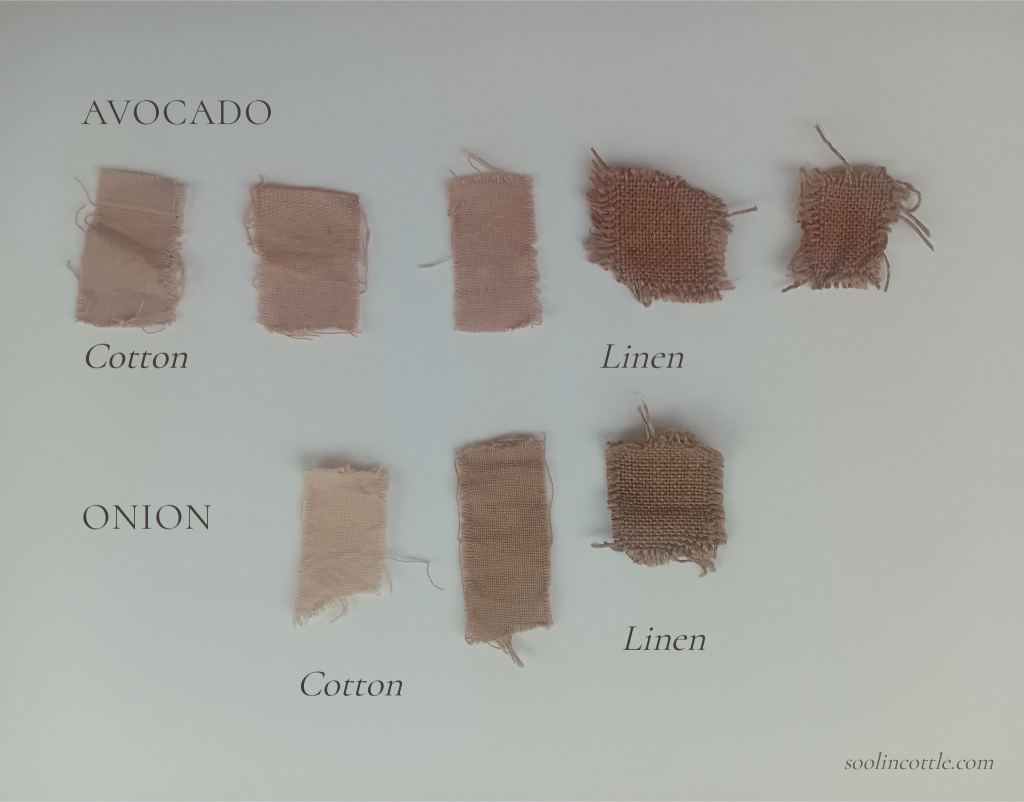
Bottom row (L to R): Cotton dyed with onion skins (first two samples), linen dyed with onion skins (last sample)
For my samples I used a 100% cotton fabric in white and a 100% linen fabric that was woven by a mill in Scotland (which sadly shut its doors a few years ago). High quality artisanal work is of tremendous value to this world, and I like to support local and independent creatives, so I bought this linen when I was back home to make canvases for my oil paintings. However, I wanted to see how it would accept the dyes as its natural colour is a medium beige and I didn’t have any dressmaking linen around.
Avocado Dye
I made the avocado dye from cleaned pits and skins. I simmered them in water for around 40 minutes and then added my pre-washed fabric samples. The dye initially looked a bit of a brownish-pink so I added some baking soda, which brought out more of the pink. After another 30 minutes I turned off the heat and left the samples to cool down for around an hour in the dye. You can see the results in the top row of the photo.
The cotton turned an absolutely gorgeous soft dusky rose and the linen turned more of a brownish-pink, nevertheless still quite beautiful. After a day I washed the third cotton sample (3rd from the left) in water and a little dish soap to see if the colour washed out, but it didn’t (hooray!)
Onion Dye
For the onion dye, I used skins from a yellow onion and simmered them in water for around 30 minutes. The dye initially looked a little brown so I added a bit of baking soda to see how/if it would affect the colour. It seemed to deepen the colour, turning the dye more of a brownish-yellow.
I put the fabric samples into the dye bath, turned off the heat and left the first cotton sample in the photo for around 20 minutes. I left the second cotton sample and the linen sample for around 40 minutes. The first cotton sample turned a very light tan, the second cotton sample turned a medium brown shade and the linen sample turned a darker brown – all lovely neutral shades.
I’m absolutely delighted with the gentle, neutral colours of the samples and how well the dyes seem to have bonded with the fabrics. This has sparked off so many ideas for future projects!